
Emergency Septic Service — Complete Guide
When sewage backs up into your shower or your septic alarm starts screaming at midnight, you need answers fast, not a call center script. This guide covers everything Fontana homeowners need to know about emergency septic service, from the first warning signs to what a fair after-hours call-out should cost. You will learn how to slow the damage in the first hour, which fixes you can safely try yourself, and how repair timelines actually play out. Beyond that, we link to detailed guides on every piece of the emergency puzzle, so you can go deeper wherever your situation demands. The goal is simple: help you act quickly, avoid crisis markups, and get your system back to normal.
What You'll Find in This Guide
- Finding Emergency Septic Service Open Now: 24/7 Help for Fontana, CA Homes
- Signs Your Septic System Is Failing: Catch an Emergency Before It Backs Up
- Emergency Septic Service Terms Explained: A Plain-English Glossary
- How Much Does Emergency Septic Service Cost?
- DIY Septic Emergency Fixes That Work vs. Mistakes That Cost Thousands
- What Triggers a Septic Emergency? Warning Signs and What to Do Right Now
- How Long Emergency Septic Repairs Take: Timeline From Call to Fixed System
- Septic Tank Backup Causes, Quick Fixes, and When to Call for Help
Recognizing a Septic Emergency Before It Reaches Your Floor
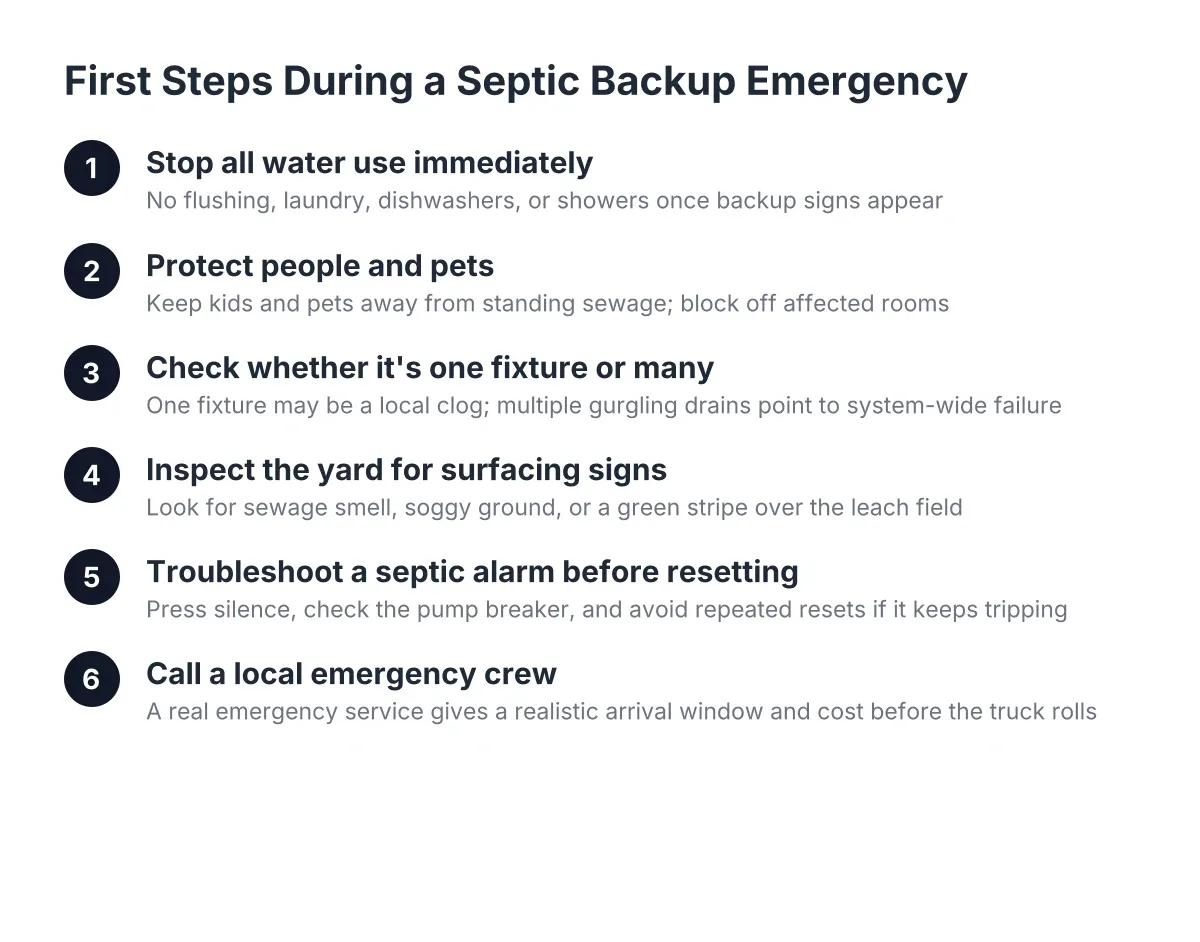
Most septic emergencies announce themselves before sewage ever touches your bathroom tile. Drains slow down across the whole house, not just one sink. Toilets gurgle when the washing machine drains. A sewage smell drifts across the yard, or a patch of grass over the drain field turns soggy and unusually green. If your system has a pump, an alarm may sound or a red light may flash on the control panel.
Any one of these signs deserves attention. However, two or more at once usually means your tank is full, your drain field is saturated, or a line is blocked. At that point, every flush pushes the problem closer to your floor. Our guide to the signs your septic system is failing walks through the full warning list, including the subtle ones new septic owners in Fontana often miss.
Why Fontana Homes Get Caught Off Guard
Septic systems are less common in California than in most states. According to the U.S. Environmental Protection Agency, only about 10% of California homes use septic, compared to a high of 55% in Vermont. As a result, many Fontana homeowners bought a septic property without ever living on one before. They do not know where the tank is, what the alarm means, or how often the tank needs pumping. That knowledge gap turns small problems into weekend emergencies.
Tank capacity matters here too. San Bernardino County Department of Public Health requires a minimum 1,000-gallon tank for a 3-bedroom home and 1,500 gallons for a 5-6 bedroom home. If your household outgrew the tank, or a previous owner undersized it, the system fills faster than you expect. For a full breakdown of what pushes a system over the edge, see what triggers a septic emergency and what to do in the first hour. Acting inside that first hour, before wastewater reaches living space, is the single biggest factor in keeping cleanup costs down.
What Emergency Septic Service Costs and How to Spot Fair Pricing
Cost is usually the second question after "how fast can you get here." The honest answer is that price depends on three things: what actually failed, how hard your tank is to reach, and when you call. A straightforward daytime pump-out with an exposed lid sits at the low end. In contrast, a midnight backup with a buried tank and a blocked line costs more, because it takes more labor and more time. Our emergency septic service cost guide breaks down each scenario with realistic ranges, so you know what a fair quote looks like before anyone hands you one.
Here is the number that puts emergencies in perspective. EPA guidance states regular septic maintenance costs $250 to $500 every three to five years, versus $5,000 to $15,000 to repair or replace a failed conventional system. To put it simply, the pump-out you skipped is a fraction of the repair bill it prevents. That gap is why we push maintenance so hard, even though emergencies pay better.
How to Avoid the Crisis Markup
Some companies treat a panicked homeowner as a pricing opportunity. You can protect yourself with three habits. First, ask for the call-out fee and the pumping rate before the truck rolls, and get them stated plainly. Second, ask what could change the price on site, such as a buried lid or a second tank compartment. Third, be wary of anyone who quotes a total repair over the phone without seeing the system, because nobody knows what failed until they open the tank.
Beyond that, watch out for well-meaning DIY moves that inflate the final bill. Pouring chemical drain cleaner into a septic line, for example, can kill the bacteria your tank depends on and create a hazard for the crew. Our guide to DIY septic emergency fixes that work versus mistakes that cost thousands separates the safe stopgaps from the expensive ones. In practice, the cheapest emergency is the one where you stop using water, protect the area, and let a local crew handle the rest.
Emergency Septic Service: From First Call to Fixed System
Knowing what happens after you call takes most of the fear out of a septic emergency. A good local crew starts triage on the phone. They ask what you see, where the water is going, and whether you can stop using water in the house. That conversation alone often prevents hundreds of dollars in damage. This is also where a local operation beats a national directory, because the person answering actually knows Fontana soil, county rules, and drive times. Our guide to finding emergency septic help after hours explains how to tell a real local crew from a lead-reselling call center.
On site, the crew locates and opens the tank, checks the levels, and pumps it down. In most cases, that pump-out stabilizes the situation the same day. Afterward, they diagnose the root cause. Sometimes it is simply a full tank. Other times it is a clogged inlet baffle, a failed pump, roots in the line, or a saturated leach field. Small culprits add up too. The EPA notes a single leaky or running toilet can waste as much as 200 gallons of water per day, and that constant load can push a tired system into failure. For the full range of culprits, see septic tank backup causes and emergency triage.
Timelines and Talking the Same Language
How long the full fix takes depends entirely on the diagnosis. A pump-out and line clearing often wraps up in hours. However, a drain field repair can take days, and a full leach field replacement with county permits can stretch to weeks. Our timeline guide on how long emergency septic repairs take maps each scenario from first call to final inspection, so you can plan around it.
One more thing helps you stay in control: understanding the words the crew uses. Terms like baffle, effluent, scum layer, and leach line get thrown around fast during an emergency. With this in mind, keep our plain-English emergency septic glossary handy. When you understand the diagnosis, you can judge the quote, ask better questions, and avoid paying for work you do not need. For general system care between emergencies, the EPA's SepticSmart program offers solid homeowner guidance as well.
Frequently Asked Questions
What are the signs of a septic system emergency in Fontana?
Sewage backing up into tubs or drains, multiple slow drains, gurgling toilets, sewage odor in the yard, and soggy ground over the drain field signal emergencies. A sounding septic alarm also counts. If two or more appear together, stop using water and call for help.
How much does emergency septic service cost in Fontana, CA?
Costs depend on what failed, tank accessibility, and time of day. Pump-outs cost less than repairs; after-hours calls add a premium. EPA guidance puts routine maintenance at $250–$500 every few years, while repairs or replacement run $5,000–$15,000. Always request the call-out fee and pumping rate before the truck arrives.
How long does it take to fix a septic emergency?
Most emergencies stabilize same-day with a pump-out, often within hours. Underlying repairs vary: blocked lines clear in hours, pump replacement takes a day, and leach field replacement with permits stretches to weeks.
What should I do if my septic tank backs up?
Stop all water use immediately—no flushing, laundry, or dishwashing. Keep people and pets away from sewage and avoid pouring chemicals down drains. Call a local septic crew and describe exactly what you see so they can triage and prioritize your visit.
Can I fix a septic emergency myself or do I need a professional?
You can shut off water use and clear obvious clogs, but opening tanks, pumping sewage, and diagnosing failed drain fields require equipment, licensing, and training. DIY attempts risk injury and often escalate costs.
What happens if you ignore a failing septic system?
Problems worsen: full tanks back up into homes, stressed drain fields fail, exposing families to sewage and risking groundwater contamination. Repairs for failed systems cost $5,000–$15,000. Early action almost always costs less.
Ready to Get Started?
If sewage is backing up right now, or your alarm just went off, stop running water and call us. You will reach a Fontana crew that answers directly, quotes the call-out fee upfront, and shows up with a pump truck instead of a script. No crisis markup, no distant dispatch, just a straight answer and a fast fix.