
Septic Tank Design Inspection: How to Spot Structural Issues Before They Cost You
If you just bought a home on septic in Fontana, CA, a septic tank structural inspection is the fastest way to find out what is actually buried in your yard. It tells you how the tank was built, whether the structure is sound, and whether the design itself is causing problems. This matters more than most new owners realize. A tank with a cracked wall or a failed baffle can look fine from the surface for years, right up until sewage backs up into the house.
This guide walks through what a design-focused inspection covers, the structural issues an inspector looks for, what the process looks like step by step, and what it should cost. It is written for first-time septic owners and for landlords with a few rental units on septic who need a straight answer, not a sales pitch.
Why Tank Design Matters More Than Most Owners Think
A septic system is simple on paper. According to the U.S. Environmental Protection Agency, a conventional system has two main components: the septic tank and the drain field. The tank holds wastewater long enough for solids to settle, and the drain field disperses the clarified liquid into the soil.
That simplicity hides a lot of design detail. The tank has an inlet pipe, an outlet pipe, baffles at both ends, and one or more chambers. Each part has a job. When the design is wrong, or when a part of the design has broken down with age, the whole system drifts toward failure.
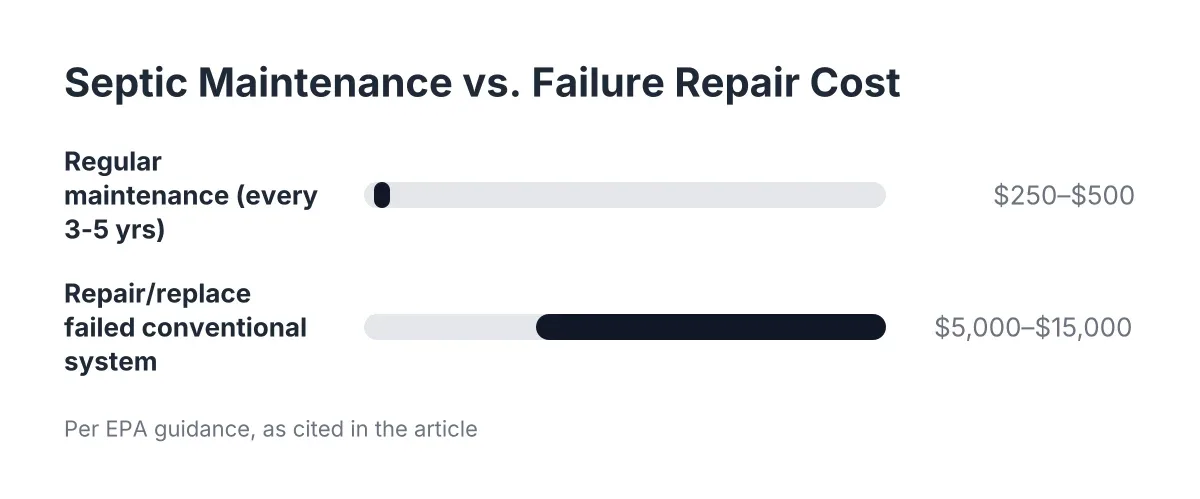
Here is the key fact. According to University of Nebraska-Lincoln Extension, the outlet pipe must sit lower than the inlet pipe, because solids float on top of the liquid and only liquid should leave the tank toward the drain field. If a baffle fails or the outlet geometry is off, solids escape into the drain field. Solids in the drain field clog soil pores, and a clogged drain field is the expensive failure. EPA guidance puts regular maintenance at $250 to $500 every three to five years, versus $5,000 to $15,000 to repair or replace a failed conventional system. The gap between those two numbers is the whole argument for inspecting design and structure before problems start.
Septic is also less common in California than in much of the country. EPA data shows about 10% of California homes use septic, compared to a high of 55% in Vermont. That means plenty of local buyers, agents, and even general home inspectors have limited septic experience. A design-focused look from a septic tank inspector fills that gap.
What a Septic Tank Structural Inspection Covers
A septic tank structural inspection checks three things: how the tank was designed, whether the structure is still intact, and whether wastewater is moving through it the way the design intends. It goes deeper than a quick lid-lift. The inspector confirms the layout, tests the components, and documents the tank's real condition in writing.
Break that into the specific items a thorough inspector works through:
- Tank location and layout. Where the tank sits, where the lids are, and where the drain field runs. On older Fontana properties, nobody may have recorded this, so locating and digging up the lids is often step one.
- Tank material and construction. Most local tanks are concrete, though shapes and configurations vary by region; some areas use rectangular concrete tanks while others use circular tanks, according to International Code Council. Material matters because concrete, steel, and plastic fail in different ways.
- Inlet and outlet condition. The inspector opens the lids and checks both sides for clogged tees, root intrusion, and pipe damage.
- Baffle integrity. According to University of Nebraska-Lincoln Extension, tanks use a downward-facing tee with a pipe section at both the inlet and outlet; these baffles stop solids from floating out and force them to settle. Missing or broken baffles are one of the most common design-related failures in older tanks.
- Structural condition of walls, floor, and lids. Cracks, spalling concrete, exposed rebar, and sagging lids all get noted.
- Water level and flow behavior. Normal level, high level, or low level each tells a different story, which the next section covers.
- Evidence of past leaks or past overfills. Stain lines inside the tank show whether the water has ever sat above the normal operating level.
For a first-time owner, the written report is the real product. A standard report documents the property address, date of service, tank material, whether the tank has ever been full, whether tees were clogged, and the overall tank integrity. Keep that report. It is your baseline for every future service visit, and if you ever sell, it is proof of care.
Structural Issues an Inspector Looks For During a Septic Tank Structural Inspection
Structural problems during a septic tank structural inspection fall into five buckets: cracks in the tank body, failed baffles, damaged inlet or outlet pipes, root intrusion, and settling around pipe connections. Each one traces back to either the original design, the installation, or decades of wear. Here is how an experienced eye reads each one.
Cracks and Wall Deterioration
Concrete tanks are durable, but not forever. Sewage gases attack concrete above the waterline, and over decades the top portion of the tank can soften and spall. An inspector looks at the walls for hairline cracks, larger structural cracks, and sections where the surface crumbles to the touch of a probe.
A cracked tank leaks in two directions. Wastewater can leak out into the soil, or groundwater can leak in and overload the drain field. Either way, the tank is no longer doing its design job of holding and settling wastewater. On a pre-purchase inspection, a structural crack is the finding that changes the negotiation, so you want it found before closing, not after.
Baffle Failure, the Most Common Design Weak Point
Baffles are where design and age collide. Many old septic tank designs used concrete baffles cast into the tank itself. Those concrete baffles erode from gas exposure and can break off entirely. Modern designs use plastic sanitary tees that resist corrosion, and a broken concrete baffle can usually be replaced with a plastic tee during service.
When the outlet baffle fails, floating scum and grease flow straight into the drain field. The system seems to work fine while the drain field quietly clogs. By the time drains slow in the house, damage is done. This is why a septic system inspection that skips the baffles is not a real inspection.
Inlet and Outlet Pipe Problems
The inspector checks both pipes where they enter and leave the tank. Clogged tees, cracked pipe at the tank wall, and bellied pipe sections all show up here. One detail from installation practice explains a lot of these failures: the fill material around the point where pipe penetrates the tank must be compacted thoroughly during installation, according to Onsite Installer. If it was not, the soil settles over the years, the pipe drops, and the connection cracks or separates.
Sometimes the problem hides under dirt. A common move when investigating an issue near the tank is to clean the area with a pressure washer first; washing away years of grime can reveal pipe damage that plain looking never would.
Root Intrusion
Tree and shrub roots hunt for water, and a septic tank is a buried water source. Roots work into lid seams, pipe joints, and any existing crack, then widen the opening as they grow. An inspector checks for roots near and inside the tank, because roots signal both an existing gap in the structure and a growing one.
Water Level as a Design Diagnostic
The water level inside the tank is the single most telling reading in the whole inspection. A tank operating correctly holds water right at the bottom of the outlet pipe. A level above the outlet means the drain field is not accepting water; a level below the outlet means the tank is leaking. Here is a practical test inspectors use: if the outlet pipe stays submerged over several days of observation, the drain field is not draining as designed.
Water clarity tells a story too. With the outlet baffle open, an inspector can judge tank condition by looking at the water. If sunlight passes through the liquid near the outlet, the tank is clarifying wastewater the way the design intends and is not clogged.
Why the Tank Gets Pumped Before the Design Inspection
Pumping the tank before a design inspection is the only way to see the structure. A full tank hides its own walls, floor, baffles, and any crack below the waterline. A pump-out empties the tank so the inspector can see, photograph, and assess the true condition of everything the design depends on.
Think of it like a home inspection with the lights off versus on. With the tank empty, the inspector can check every chamber, verify the separation between compartments, confirm the baffles are intact top to bottom, and photograph any crack or erosion for the report. Those interior photos matter for a landlord especially; they are dated evidence of condition that you can file against each unit.
Pumping first also catches the sludge-depth story. If the tank was overdue and solids had risen near the outlet, that shows up during the pump-out, and it tells you solids may have already reached the drain field. A follow-up leach field inspection would then be the smart next step rather than an upsell.
There is a limitation worth naming. An inspection with pumping tells you the tank's condition on that day. It cannot predict exactly when a 40-year-old tank will fail, and it cannot see every inch of buried pipe between the house and the drain field. For recurring backups that a tank inspection does not explain, a camera inspection of the lines or a professional drain field assessment is the right call, and that is work for a septic professional, not a weekend project.
What the Process Looks Like in Fontana, CA
For homeowners in Fontana, CA, a design-focused inspection follows a predictable sequence. Knowing the steps ahead of time makes it easy to tell a thorough septic tank inspector from a drive-by lid check.
- Locate the tank and expose the lids. On older properties this can mean probing and digging, since records are often missing.
- Open the lids and read the baseline. The inspector checks water level in each chamber, float positioning if there is a pump, and the separation between compartments before anything else happens.
- Inspect the inlet and outlet sides. Both tees get checked for clogs, breaks, and roots.
- Pump the tank. The pump-out clears the view for the structural assessment.
- Assess and photograph the interior. Walls, floor, baffles, and pipe penetrations get checked and documented.
- Confirm flow to the drain field. Water run from the house should enter the tank at the inlet; the outlet side behavior shows whether the drain field accepts flow.
- Deliver the written report. Findings, photos, and any recommended repairs in plain language.
Local design standards shape what the inspector expects to find. San Bernardino County's minimum capacity table requires a 1,000-gallon tank for a 3-bedroom home and 1,500 gallons for a 5-6 bedroom home, according to San Bernardino County Department of Public Health. An inspector who finds a 750-gallon tank under a 4-bedroom house has found a design mismatch, and that undersizing explains a lot of chronic problems on older Fontana properties. Every original system also required a percolation test before installation to prove the soil drains, according to University of Nebraska-Lincoln Extension, so soil behavior was part of the design from day one.
Suppose a first-time buyer closes on an older Fontana home where the sellers never pumped the tank. Say the home inspection flagged the septic with a vague note that it "needs attention." In that scenario, a design inspection with pumping would likely find one of three things: a healthy tank that just needed a pump-out, a failed concrete outlet baffle that a plastic tee can replace for a modest repair cost, or standing water above the outlet pointing to a tired drain field. Each finding leads to a different budget conversation, and all three are better learned in week one than in year three.
Costs, Timing, and What a Fair Quote Includes as of 2026
An inspection with a pump-out is the standard package, and the pumping portion typically lands in the range EPA cites for routine maintenance, $250 to $500 per visit, with the inspection and report scoped on top of that. As of 2026, treat any quote as an estimate until the crew sees the tank; access difficulty, tank condition, and how much digging the lids require all move the number. What should not move is transparency. A fair quote tells you what the visit includes before the truck arrives.
A legitimate design inspection quote should cover:
- Locating and exposing the tank lids
- Full pump-out of all chambers
- Interior structural assessment with photos
- Baffle and tee inspection on both inlet and outlet sides
- Water level and flow observations
- A written report you keep
For a small landlord with units in the Fontana area, the math favors a schedule over emergencies. An inspection and pump-out on a predictable cycle costs hundreds per visit; a shared-system failure that displaces tenants costs thousands and vacancy on top. Scheduled service also builds a paper trail per unit, which helps when code enforcement asks questions or when a tenant complaint needs a documented answer.
Timing matters for homeowners too. Household habits change the load on the tank. A single running toilet can waste as much as 200 gallons of water per day, according to the U.S. Environmental Protection Agency, which pushes water through the tank faster than solids can settle. Grease is the other quiet enemy; EPA's report to Congress found grease is the most common cause of reported sewer blockages at 47%. A design inspection can confirm the tank is sound, but what goes down the drain decides how long that stays true.
How to Tell a Thorough Inspector From a Fly-By Operator
New septic owners worry about being upsold, and that worry is fair. The simplest filter is whether the inspector follows the design logic described above or skips it. A few tells separate a real septic system inspection from a glance and an invoice.
A thorough inspector opens both lids, not one. They check baffles, not just water level. They pump before judging the tank structure, and they photograph what they find. Additionally, they explain findings against how the septic tank design is supposed to work, so you understand why a broken outlet baffle threatens the drain field rather than just hearing that "it needs fixing." Also worth knowing: designing and installing systems is its own discipline with separate licensing in many states, covering soil types, percolation rates, and system design, according to New Hampshire Department of Environmental Services. An inspector who talks fluently about your tank's design is showing you the depth behind the lid check.
Red flags run the other direction. Be cautious with anyone who diagnoses a tank without opening it, recommends replacement without interior photos, or quotes major repair work on the first phone call before seeing the property. A local crew that works only on septic systems, answers its own phone, and puts findings in writing gives you something a dispatch center cannot: the same people at the tank every time, building a service history on your property.
For a first-time owner in Fontana, the practical path is short. Get a design inspection with a pump-out early, keep the report, fix any baffle or tee issues while they are cheap, and put the next pump-out on the calendar. The tank buried in your yard was designed to work quietly for decades. An hour of looking at that design, with the tank empty and a camera in hand, is what keeps it that way.
If you need septic tank pumping, Fontana Septic can help.
Prefer to talk it through? Call (909) 316-2368 — a quick call is usually the fastest way to get a straight answer for your situation.