
Drain Cleaning — Complete Guide
On a septic system, a slow drain is never just an annoyance. It could be a simple clog a drain cleaning service clears in an hour, or it could be the first warning that your tank is full and your leach field is struggling. This guide covers how to tell the difference, what causes residential clogs, which cleaning methods are safe for septic homes, and what a fair price looks like in Fontana. By the end, you will know whether to book a drain crew, schedule a pump-out, or handle the fix yourself.
What You'll Find in This Guide
- Drain Cleaning Equipment Types Explained: Plungers, Snakes, and Hydro-Jetting
- What Causes Residential Drain Clogs: Hair, Grease, Roots, and Septic Trouble
- Drain Cleaning in Fontana, CA
- Slow Drain: When a Drain Cleaning Service Fixes It vs. Septic Pumping
- Best Drain Cleaning in Fontana, CA: How to Choose
- Drain Cleaning Terms Explained: A Plain-English Glossary
- How Much Does Drain Cleaning Cost?
- DIY Drain Cleaning Methods That Work, and the Ones That Wreck Septic Systems
Prefer to have a pro handle it? Drain Cleaning is one call away.
Is It a Clogged Pipe or a Septic Problem?
This is the question that matters most: a clog lives in a pipe, while septic trouble lives in the tank or leach field. Both produce the same symptom at your sink, so the fix depends on finding the real source.
If one fixture drains slowly and everything else runs fine, you likely have a localized clog—hair in a bathroom trap or grease buildup in a kitchen line. If multiple drains slow down at once, especially the lowest ones in the house, the problem sits farther downstream. That could mean a main line clog, a full septic tank, or a saturated leach field. Gurgling toilets, sewage odors in the yard, and soggy grass over the drain field point toward septic.
The distinction is expensive to get wrong. Pay for a septic pump-out when the real problem is a root ball in your main line, and the slow drains return quickly. Pay a drain crew to snake a line when your tank is overflowing, and you've bought temporary relief only. Our guide on when a drain cleaning service fixes it versus septic pumping walks through the diagnosis step by step so you can call the right crew the first time.
The stakes grow if you ignore warning signs. According to the U.S. Environmental Protection Agency, regular septic maintenance costs $250 to $500 every three to five years, while repairing or replacing a failed conventional system runs $5,000 to $15,000. A slow drain that turns out to be an early septic symptom is a cheap catch. The same symptom ignored for a year can become the most expensive repair your property ever sees. For details on what creates these blockages, see what causes residential drain clogs.
How Professional Drain Cleaning Service Clears Your Lines
Once you know the problem is in the pipes and not the tank, the next question is method. Drain cleaning is not one technique. It is a toolbox, and each tool suits a different kind of blockage. Understanding the basics helps you evaluate quotes and avoid paying for the wrong approach.
Snaking, Hydro-Jetting, and Camera Inspection
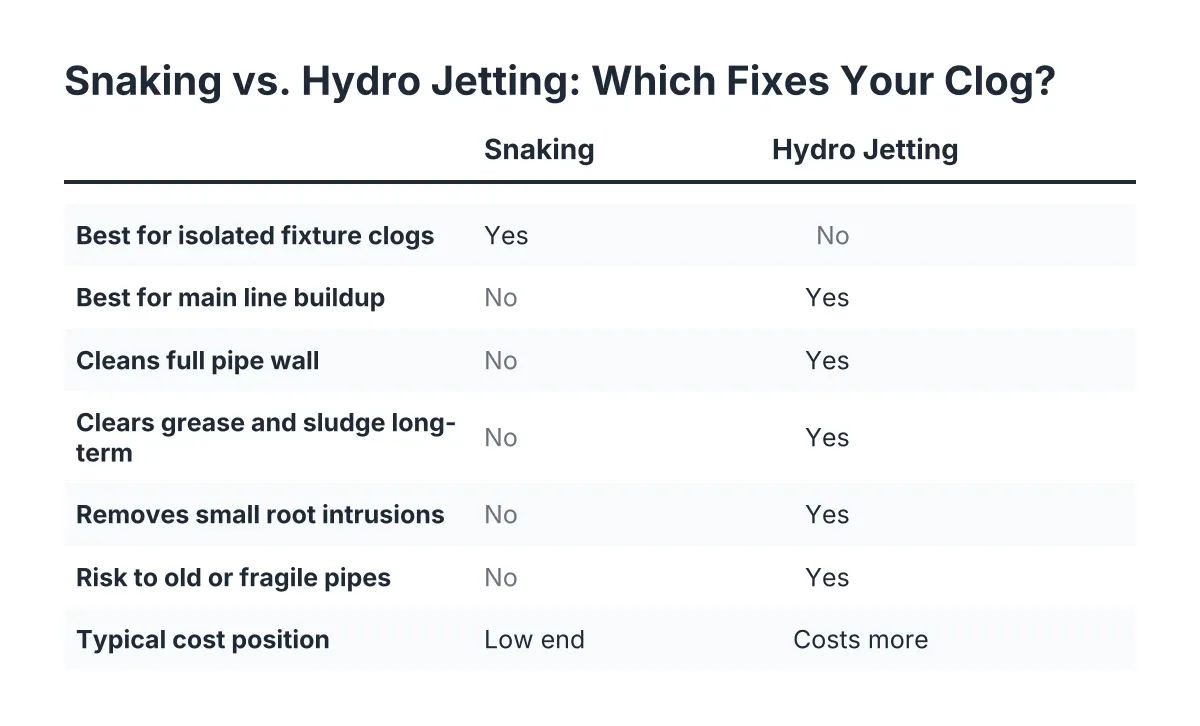
A drain snake, also called an auger, is the workhorse. It pushes a flexible cable through the line and breaks up or retrieves the clog. Snaking works well on hair masses, paper blockages, and soft obstructions. That said, it punches a hole through buildup rather than removing it. Grease and scale often close back in within months.
Hydro-jetting takes a different approach. High-pressure water scours the full diameter of the pipe, stripping grease, sludge, and even small roots off the walls. As a result, jetting lasts longer on greasy kitchen lines and main lines with heavy buildup. It costs more, though, and older or damaged pipes need a camera inspection first to confirm they can handle the pressure. Our guide to drain cleaning equipment types compares these tools in detail, including which ones make sense on a septic property.
Camera inspection is the step that separates guesswork from diagnosis. A video camera fed through the line shows exactly what is blocking it and where. For septic homes, this matters even more, because the camera can reveal whether the problem stops at the pipe or continues into the tank.
Why Septic Homes Need a Septic-Aware Crew
Grease deserves special mention here. The EPA's report to Congress found that grease is the most common cause of reported sewer blockages, at 47%. Your septic tank feels this even more than a city sewer does, because grease that passes the pipes still ends up in your tank, thickening the scum layer. A drain cleaning service that understands septic systems will flag heavy grease as a tank issue, not just a pipe issue. A crew that only thinks in pipes will clear the line and leave the bigger problem sitting in your yard.
What Drain Cleaning Costs and How to Choose a Crew in Fontana
Price is usually the first question, and the honest answer starts with location of the clog. A slow bathroom sink is a quick, inexpensive job. A main line backup that requires jetting and a camera inspection costs several times more. Anyone who quotes a firm number before asking where the clog sits and what caused it is guessing. Our drain cleaning cost guide breaks down typical ranges by job type, so you can spot both lowball bait pricing and inflated quotes.
Red Flags and Green Flags in a Quote
Beyond price, watch how a company diagnoses. A good crew asks questions before quoting. For example, they want to know how many fixtures are affected, whether you are on septic, and when the tank was last pumped. In contrast, a call center reads a script and dispatches whoever is closest. If a quote includes terms you do not recognize, our plain-English drain cleaning glossary translates the jargon on estimates and service tickets.
Chemical drain openers deserve their own warning. On city sewer, a bottle of caustic cleaner is merely hard on the pipes. On septic, it can shock the bacteria your tank depends on to break down waste. Consequently, some of the most popular DIY advice online is actively harmful for Fontana homes on septic. Before you pour anything down a drain, read our guide to septic-safe DIY drain cleaning methods, which separates the fixes that work from the ones that create a second, bigger bill.
Finally, consider who actually shows up. National directories and franchise brands route your call through distant dispatch, and septic knowledge is often an afterthought. A local crew that services septic systems every day approaches your slow drain differently, because they know the whole system, not just the pipe. Our guide to choosing the best drain cleaning in Fontana gives you a checklist for comparing companies, and our Fontana drain cleaning service page explains exactly how we handle diagnosis, from the first phone question to the camera in the line. For broader septic care basics, the EPA's SepticSmart program is also a solid free resource.
Frequently Asked Questions
How much does it cost to clean drains?
It depends on where the clog sits and how hard the line is to reach. A single slow fixture is typically a low-cost, quick visit, while a main line clog requiring hydro-jetting or a camera inspection costs significantly more. Our cost guide covers typical ranges and the factors that move a quote.
How much does it typically cost to unclog a drain?
Simple fixture clogs sit at the low end of the price range, often a basic service call plus snaking. However, main line work, root removal, and jetting push the price up because they take more time and heavier equipment. Get a diagnosis before you accept any firm number.
How much does Roto-Rooter drain cleaning cost?
Franchise pricing varies by location and job, and most franchises quote only after an on-site visit. Keep in mind that national brands often route calls through regional dispatch, so the price and the crew can vary widely. Comparing a franchise quote against a local septic-aware crew usually tells you quickly which one understands your system.
Who are some good plumbers in Fontana, CA?
For general plumbing like fixture installs or water heaters, a licensed local plumber is the right call. For drains on a septic property, though, you want a crew that handles septic systems daily, because a pipe-only plumber can miss tank and leach field symptoms. Our guide to choosing drain cleaning in Fontana shows you what to check before you book anyone.
Ready to Get Started?
If a drain in your Fontana home is running slow, gurgling, or backing up, do not guess at the cause. Call a local crew that knows both drains and septic systems, gets a real diagnosis, and fixes the actual problem instead of the symptom. One straight answer now beats a five-figure septic repair later.