
Can You DIY Septic Pump Replacement, or Should a Fontana, CA Crew Handle It?
So can you DIY a septic pump swap, or is this a job for a local crew? The honest answer: part of it is within reach for a careful owner, and part of it is not. If you manage rental properties on septic around Fontana, CA, the wrong call here can turn a tenant's slow drain into a habitability complaint. This guide walks the decision step by step, so you know exactly where the DIY line sits, what a pro visit involves, and what it should run you in 2026.
Step 1: Confirm the Pump Is the Problem Before You Touch Anything
Do not assume a dead pump just because a tenant reports a backup. Slow drains can come from a full tank, a clogged line, a blocked effluent filter, or a tired leach field. Replacing a pump that was never broken wastes money and leaves the real problem in the ground.
Run through these checks first:
- Is the pump alarm sounding or the alarm light on at the control panel?
- Has the breaker for the pump circuit tripped?
- When was the last pump-out? A tank overdue for septic tank pumping can mimic pump failure.
- Are drains slow at one fixture or across the whole unit? One fixture usually means a local clog, not the pump.
For an active family of four, pumping the tank every two to three years is generally advisable, according to Penn State Extension. A rental duplex with full-time tenants produces at least that much load, often more. If the tank has not been pumped in five years, schedule a pump-out and a septic system inspection before you buy any parts.
Step 2: Identify Which Kind of Pump You Have
Pump systems are not all the same, and the type decides how much of this job you can take on yourself. Most pump-assisted systems around Fontana use an effluent pump sitting in a separate pump chamber after the tank. It lifts filtered wastewater to a drain field that sits uphill or far from the tank.
Aerobic systems use an aerator, which is an air pump that sits above ground or in a shallow housing. Some properties also have a grinder or sewage pump handling raw waste. Check the control panel, the original permit paperwork, or lift the pump chamber lid and look. If you cannot tell what you are looking at, a septic tank inspector can identify it in one visit.
Step 3: DIY Septic Pump Swap—What You Can and Cannot Handle
Can you DIY septic pump replacement? For an above-ground aerator on an aerobic system, often yes. The job is mostly swapping wire connections and an air tube fitting, with no entry into the tank. A landlord comfortable with basic electrical work can handle that in an afternoon.
An effluent pump inside a pump chamber is a different animal. When considering a DIY septic pump swap in a chamber, here is what that job actually involves:
- Opening a chamber that holds wastewater and gases you should never breathe or lean into.
- Disconnecting a check valve and discharge pipe, often while standing over an open pit.
- Pulling a pump that may weigh 40 to 60 pounds, coated in what you would expect.
- Matching the replacement pump's head height and flow to your drain field layout.
- Rewiring floats and alarm switches so the system actually protects you next time.
Get the float settings wrong and the pump short-cycles itself to death, or floods the drain field. Get the electrical wrong and you have a shock hazard in standing water. A full septic installation typically pulls in three licensed trades: an electrician for the pump wiring, a plumber for the house connection, and a septic installer for the tank and field. A pump swap compresses that risk into one hole in the ground.
The same logic applies to the bigger question people search alongside this one: can you DIY septic tank pumping? No. The waste has to be hauled by truck to a treatment plant for disposal, according to New Hampshire Department of Environmental Services. You cannot legally dump it, and a rented trash pump does not solve the disposal problem.
The Stopgap That Buys You Time
If the alarm is on and the chamber is filling, there is one move a handy owner can make while repairs get arranged. Drop a backup sump pump into the chamber with a hose and an extension cord, and pump the level down manually onto a safe discharge point if your setup allows one. That is a bridge, not a fix, but it can keep a tenant's shower draining until a crew arrives.
Step 4: Price the Job Both Ways Before You Commit
Put real numbers next to each path. For DIY on an effluent pump, figure the pump itself, a new check valve, wire connectors rated for wet locations, and your time, plus a pump-out first so you are not working over live sewage. Having the tank pumped before repair work is standard practice; inspections and fixes are far easier without wastewater moving through the system.
For a professional septic tank pump replacement, you are paying for the pump, the labor, correct float and alarm setup, and someone who has matched a hundred pumps to a hundred drain fields. A crew that carries common replacement pumps on the truck can often diagnose and swap in one visit instead of two.
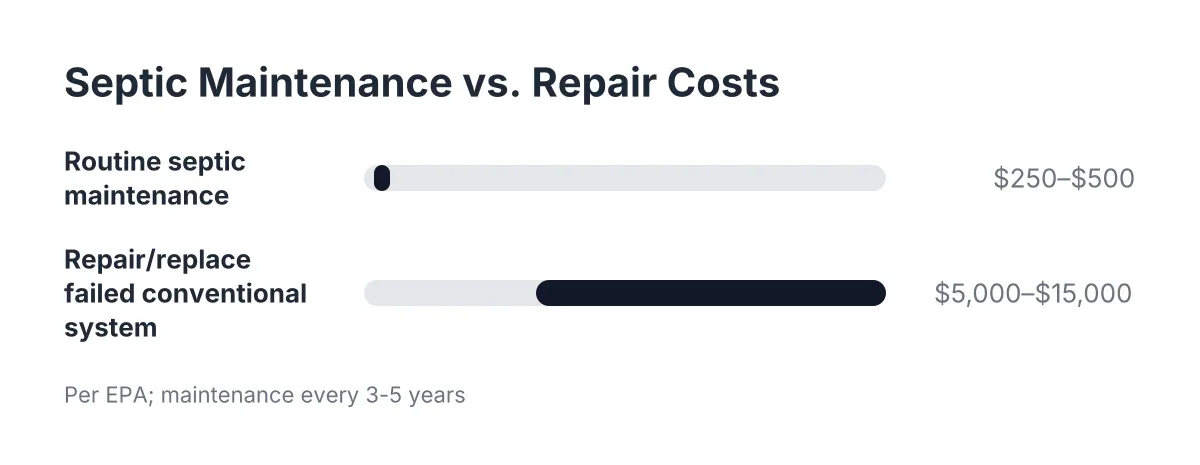
Here is the number that should frame the whole decision. According to the U.S. Environmental Protection Agency, routine septic maintenance runs $250 to $500 every three to five years, while repairing or replacing a failed conventional system runs $5,000 to $15,000. A botched pump job that floods a leach field pushes you toward the second number. For a landlord splitting system costs across two or three Fontana-area rentals, that math decides itself.
Step 5: Know What a Local Fontana, CA Crew Actually Does on a Pump Call
A straightforward pump replacement visit follows a predictable sequence. The crew locates and opens the pump chamber, confirms the pump has failed rather than a float or breaker, and checks the tank level. If the tank needs it, they pump it down first.
Next, they pull the old pump, match the replacement to the system's lift and flow requirements, set the floats, and wire the alarm. Then they test a full cycle before closing the lid. Most single-pump swaps finish the same day. While the chamber is open, a good crew will also look at the tank baffles and ask about drain performance at the house, because owners rightly expect a septic pumper to read the whole system, not just one part.
Suppose you own a duplex near north Fontana and a tenant texts about gurgling drains on a Friday. In that scenario, one visit could cover the pump swap, a pump-out, and a quick leach field check, and you get paperwork for your maintenance file. That single record matters when you are tracking costs across several properties.
Step 6: Set Up a Schedule So You Stop Replacing Pumps Early
Pumps fail early for boring, preventable reasons. Solids reach the pump chamber because the tank went too long between pump-outs. Grease builds up because tenants pour pan drippings down the sink. A running toilet can waste as much as 200 gallons of water per day, according to the U.S. Environmental Protection Agency, and all of it runs through your pump.
Therefore, build a simple program per property:
- Put each unit on a recurring pump-out schedule, every two to three years for full-time occupancy.
- Add a septic system inspection at lease turnover, before a vacancy costs you showings.
- Give tenants a one-page list of what not to put in your septic: no grease, no wipes, no harsh chemicals.
- Fix running toilets and drips the week they are reported, not at renewal.
In addition, keep in mind that tank capacity is fixed by code, not wishful thinking. San Bernardino County's minimum capacity table requires a 1,000-gallon tank for a 3-bedroom home and 1,500 gallons for a 5-to-6 bedroom home, according to the San Bernardino County Department of Public Health. If occupancy has grown past what the tank was sized for, no pump will save the system, and you should get a professional evaluation before spending anything on parts.
The Bottom Line for Fontana Landlords Weighing DIY Septic Work
Can you DIY septic pump work? Swap an aerator yourself if you are comfortable with wiring. Use a sump pump as a short-term bridge when the alarm sounds. Leave effluent pump replacement, pump-outs, and anything involving an open chamber to a local crew, because the downside is a five-figure system failure and a tenant complaint you cannot schedule around. The cheapest path across a portfolio of septic-served rentals is almost never the one-time cheap fix; it is the recurring schedule that keeps pumps, tanks, and drain fields boring.
If you need septic tank pumping, Fontana Septic can help.
Prefer to talk it through? Call (909) 316-2368 — a quick call is usually the fastest way to get a straight answer for your situation.