
Septic System Maintenance — Complete Guide
If you just bought your first home on septic, day-to-day maintenance matters more than any single service call, including the one you make when you search septic pumping near me. This guide covers the ongoing care that keeps a septic system healthy between pump-outs: what to flush, what to keep out of your drains, how to build a real maintenance schedule, and when to bring in a professional. Good habits cost almost nothing, while a failed system can cost thousands to dig up and replace. By the end, you will have a clear routine you can follow without any industry jargon getting in the way.
What You'll Find in This Guide
- Septic System Inspection Before Buying a Fontana Home: What Inspectors Check
- What Happens During a Septic System Inspection: A Step-by-Step Guide
- 7 Signs Your Septic Tank Needs Pumping Now, Before a Backup Hits
- Septic System Maintenance Terms Explained: A Plain-English Glossary
- How Often Should Fontana Homeowners Pump Their Septic Tanks by Size?
- DIY Septic System Maintenance: What You Can Do Yourself and When to Call a Pro
Prefer to have a pro handle it? Septic Tank Pumping is one call away.
Build a Septic Tank Maintenance Schedule Before Problems Start
A septic system fails quietly, giving months or years of warning signs before backup. Most signs are easy to miss without knowing what to look for—making a written maintenance schedule far better than reacting to problems.
Start with the pump-out interval. For most Fontana homes, that means every three to five years, though the right number depends on your tank size and household occupancy. San Bernardino County's minimum capacity table requires a 1,000-gallon tank for a 3-bedroom home and 1,500 gallons for a 5–6 bedroom home, according to the San Bernardino County Department of Public Health. If your household outgrew your tank, your interval shrinks. Our guide on how often to pump your septic tank by size breaks down the math for common setups.
Beyond pumping, your schedule should include recurring checkpoints. Walk your drain field each season and look for soggy spots, unusually green grass, or sewage odors. Check water fixtures for leaks at least twice a year. According to the U.S. Environmental Protection Agency, a single running toilet can waste 200 gallons of water per day. That extra water floods your tank, stirs up solids, and pushes them into the drain field where they cause real damage.
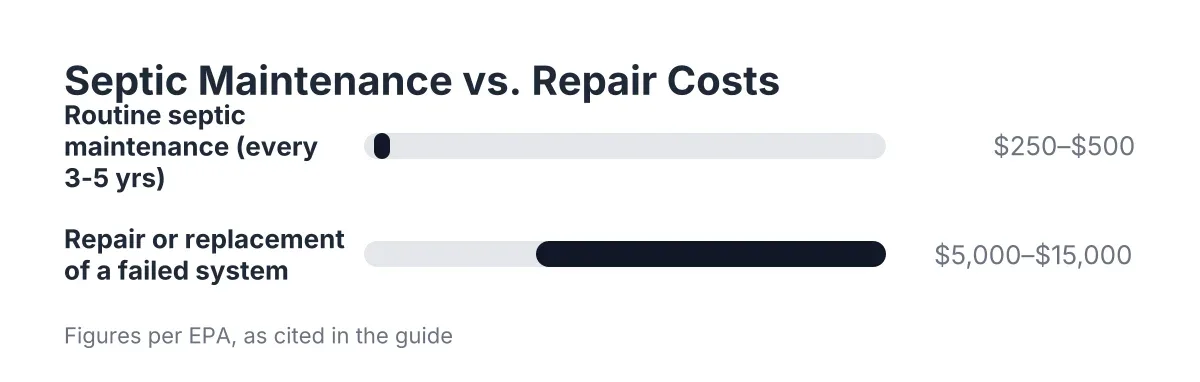
The financial case for a schedule is straightforward. EPA guidance puts regular maintenance at $250 to $500 every three to five years, versus $5,000 to $15,000 to repair or replace a failed system. The cheapest septic system is the one you maintain on time. Write your last pump-out date where you'll see it, set a reminder for the next one, and treat in-between checkpoints like changing smoke detector batteries. For a full breakdown of which tasks you can handle yourself, see our DIY septic maintenance checklist.
What Not to Flush: Septic Safe Habits That Extend System Lifespan
Your septic tank is a living system. Bacteria inside it break down waste, and everything you send down the drain either feeds that process or fights it. As a result, the single biggest factor in how long your system lasts is what your household puts into it every day.
Keep Grease, Wipes, and Chemicals Out of Your Drains
Start with the kitchen. Fats, oils, and grease coat pipes and clog systems more than almost anything else. Research published in the International Journal of Environmental Science and Technology estimates that roughly 30-40% of sewer clogs come from fat, oil, and grease deposits in pipes. In a septic system, that grease also forms a scum layer in your tank that shortens the time between pump-outs. So scrape plates into the trash, wipe greasy pans with a paper towel, and never pour cooking oil down the sink.
In the bathroom, the rule is simple: only human waste and toilet paper. That means no wipes, even the ones labeled flushable, no feminine hygiene products, no paper towels, no cotton swabs, and no cat litter. These items do not break down in the tank. Instead, they pile up as solids and force earlier pumping, or worse, they clog the line between your house and the tank.
Choose Septic Safe Products and Skip the Additives
Household chemicals matter too. Harsh drain cleaners, large amounts of bleach, and antibacterial products kill the bacteria your tank depends on. However, you do not need to buy specialty everything. Most standard detergents in normal amounts are fine, and products labeled septic safe give you extra confidence. The EPA's SepticSmart program offers a practical rundown of what belongs in a septic-friendly home.
What about septic tank additives, and do they work? For a healthy system, the honest answer is that you do not need them. A tank receiving normal household waste maintains its own bacterial population. No additive replaces pumping, and some products can actually harm your system by breaking up solids that then flow into the drain field. If a term on a product label or a service quote confuses you, our plain-English septic glossary sorts out the jargon.
Professional Septic Pumping Near Me: When to Call a Specialist
Good habits handle most septic care, but some jobs need a truck, a pump, and a trained eye. Knowing where that line sits saves you money on both sides—avoiding unnecessary service and the far bigger bill from waiting too long.
Watch for early warning signs. Slow drains throughout the house, gurgling toilets, sewage smells near the tank or drain field, and wet spots in the yard all point to a full tank or system under stress. One slow bathroom sink usually means a local clog you can clear yourself. Every drain in the house slowing down at once points to the tank or main line. Our article on the signs your septic tank needs pumping covers the full list for both homeowners and landlords.
Inspections deserve a spot on your calendar alongside pumping, not just during emergencies. A periodic inspection catches baffle damage, root intrusion, and early drain field trouble while fixes remain small. Our step-by-step guide to what happens during a septic inspection removes the mystery. If you are shopping for a home, a pre-purchase septic inspection protects you from inheriting a neglected system.
In California, septic knowledge is scarce—EPA data shows California has one of the lowest septic system rates among states, at about 10%, compared to Vermont's 55%. When you search "septic pumping near me," you want a crew that works on septic systems daily, not a national dispatch line treating septic as a sideline to drain cleaning. A local team that knows Fontana soil, San Bernardino County permitting, and your neighborhood's typical tank setups will give you a straight answer faster.
Frequently Asked Questions
How often should a septic system be serviced?
Most residential septic tanks need pumping every three to five years, with an inspection at the same visit. However, household size, tank capacity, and water habits all shift that interval. A large family on a small tank may need service every two to three years, while a couple on a properly sized tank can often stretch toward five.
What does it cost to maintain a septic system?
According to the U.S. Environmental Protection Agency, regular maintenance runs $250 to $500 every three to five years. Compare that to $5,000 to $15,000 to repair or replace a failed conventional system. In practice, routine pumping is one of the cheapest forms of home protection you can buy.
How often does a 1000 gallon septic tank need to be pumped out?
A 1,000-gallon tank serving a typical family of three to four usually needs pumping every three to four years. Smaller households can go longer, while larger households or heavy water use will shorten the interval. Our pumping schedule by tank size guide covers the specifics.
Can a septic tank go 20 years without being pumped?
Physically the tank may survive, but the system around it almost never does. Solids build up, overflow into the drain field, and clog the soil until wastewater has nowhere to go. As a result, skipping pumping for decades usually trades a few hundred dollars of routine service for a five-figure drain field replacement.
Ready to Get Started?
If you are new to septic ownership in Fontana, the smartest first step is simple: find out when your tank was last pumped and get a baseline inspection on the books. Our crew handles septic pumping, inspection, and repair all day, every day, and you talk directly to the people doing the work, not a call center. Reach out, tell us about your property, and we will help you set a maintenance schedule that keeps surprises out of your backyard.